Texas Doesn’t Trust Data Centers
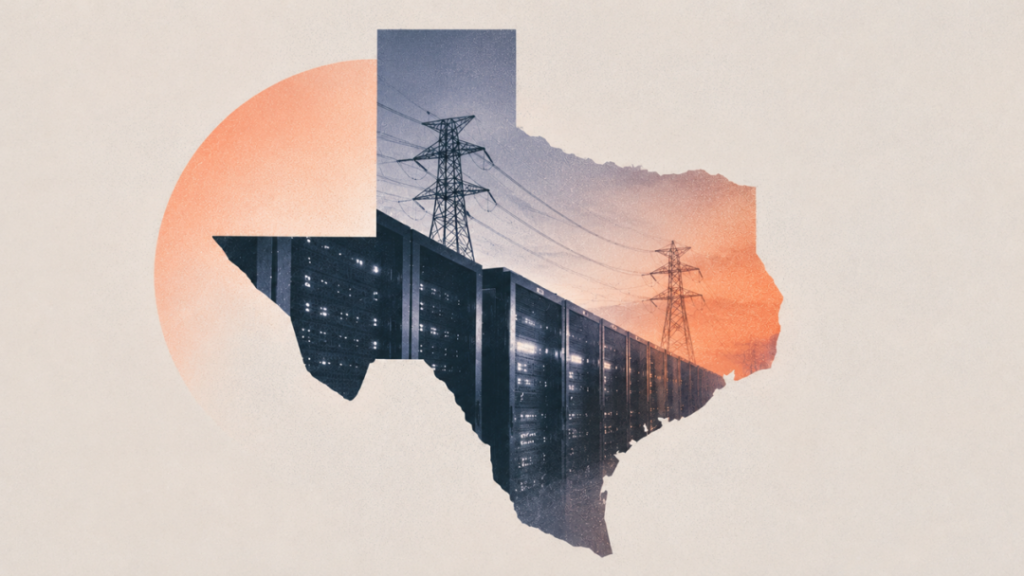
Texas Doesn’t Believe in Data Centers
Summary
Texas, which once vied for AI data center investment, is now hitting the brakes. On November 3, the U.S. midterm elections concluded, the Democratic Party regained control of both chambers of Congress and made gains in traditionally Republican strongholds such as Texas.
Texas, which once vied for AI data center investment, is now hitting the brakes.
On November 3, the U.S. midterm elections concluded, with Democrats regaining control of both chambers of Congress and making inroads in traditionally Republican strongholds such as Texas. As the political map “turns blue,” data‑center construction has become a key issue in the election, and an increasing number of voters are opposing the rapid expansion of large data centers.
According to Ballotpedia, the U.S. election information site, of the 41 data‑center‑related local referendums held that day, 40 leaned toward restricting development.Among them, 27 restrictive measures passed, while 13 proposals facilitating construction were rejected. Newly elected Texas Democratic Governor Gina Hinojosa also advocated during her campaign to pause approvals for new data centers until the state legislature enacts stricter protection rules.
This political shift coincides with a massive expansion of AI infrastructure by U.S. tech companies. In recent years, Texas has been one of the fastest‑growing data‑center markets in the country, attracting a large number of large projects under construction or in planning. As local governments may further tighten approvals, some developers have already begun reassessing their investment plans.
According to media reports, an infrastructure developer disclosed that its client originally planned to build a large AI data center in Texas, but after local approvals were suspended, the project was forced to be put on hold and is now considering a move to North Dakota.Other developers are also beginning to diversify investments toward regions with a more stable regulatory environment.The map of U.S. data‑center construction may undergo a new round of adjustment.
What’s happening in Texas?
In recent years, Texas has quickly become the core region for AI infrastructure construction in the United States, thanks to abundant land, relatively low energy prices, and tax incentives. Meta, Google, Microsoft, and a wave of emerging compute service providers have been continuously increasing their investments, and the planned power capacity of some data‑center campuses has already reached the gigawatt level.
For example, the Stargate Frontier project in Shackelford County, Texas, is planned with a power capacity of 1,820 MW; the Nexus Hubbard project, primarily intended to provide compute for Anthropic, is planned at an even larger scale of 6,400 MW.These large‑scale projects represent the key investment direction for U.S. AI infrastructure over the next few years, and tighter policies in Texas could directly affect their construction timelines.
Image | Nexus Hubbard (Source: Datacenters)
In fact, the policy shift had already emerged before the midterm elections. In August this year, then‑Republican Governor Greg Abbott asked grid operators to review interconnection applications from large data centers; on September 21, he instructed the Texas Commission on Environmental Quality to suspend issuing related permits pending further assessment of the project’s power and water resource impacts.
Previously, Abbott had been actively courting data center investment, but as local residents grew more concerned about rising electricity prices and the use of public resources, he also began demanding that developers shoulder more infrastructure construction costs to prevent additional electricity demand from further driving up residential electricity bills.
The newly elected Inohosa introduced stricter policies. During her campaign, she advocated pausing approvals for new data centers and re‑evaluating related tax incentives. With the state government changing, existing approval restrictions may persist for a longer period.
Industry insiders had originally expected Texas’s grid review to be completed by the end of this year, followed by a gradual resumption of approvals. However, the new administration wants to wait for the state legislature to establish new regulatory rules, and the next regular legislative session in Texas will run from January to May 2027. Some industry participants therefore worry that the related restrictions could extend into mid‑next year or even later.
The uncertainty surrounding this approval outlook has already begun to affect corporate decision‑making.Local developer Giga Energy said it will continue expanding its business to other states that have not implemented a pause. BaRupOn’s CEO also revealed that an AI client originally planned to build a large campus in Texas, but due to the local approval pause, decided to wait for the election results and is now ready to shift the investment to North Dakota.
However, the Texas data‑center industry will not shut down entirely because of a single election.
The construction of data centers in Texas involves multi‑level decision‑making among the state government, county officials, and municipal departments, with varying interests and positions across regions. Some counties with a high concentration of data centers still support the Republican Party, while other areas hope to continue relying on large projects to create jobs and generate tax revenue. Even if the new governor wants to halt construction entirely, implementation will still require coordination among different government agencies and local interests.
Therefore, the projects most likely to be affected are new developments that have not yet completed approvals, grid connections, or financing arrangements. For parks that have already obtained permits and entered the construction phase, existing building plans usually have greater continuity.
If Texas is no longer an option, where can U.S. data centers be built?
In fact, U.S. data centers have long been trending to expand beyond traditional hubs.
JLL’s report released in August this year shows that under‑construction data center capacity in North America exceeds 66 GW, with 77% located in emerging markets.Beyond West Texas, Ohio, Louisiana, Indiana, and the Carolinas are continuously attracting investments from tech companies and infrastructure developers.
(Source: JLL Research)
These regions typically have relatively ample land, and some can also rely on existing energy facilities to provide power support for large‑scale computing projects. North Dakota is one such new option. The area has abundant energy resources and a low population density, and it has not been prominent in the large data center market before. Now, as Texas tightens approvals, some companies are considering launching projects here.
Similar site adjustments may occur in other energy‑rich states in the future, such as Ohio or Georgia. However, even if developers leave Texas, they still have to deal with power access, project approvals, and coordination with local communities.
Among them, grid connection is the hardest to solve in the short term. Large AI parks require hundreds of megawatts to even gigawatt‑scale power supply, and grid expansion involves transmission lines, substations, and new power source construction, which usually takes a long cycle.
For large training clusters, the data center may be built and servers procured, yet power cannot be supplied for a long time, resulting in massive capital lock‑up. Some developers have previously invested in land, engineering design, and grid connection deposits in Texas; moving the site temporarily means re‑applying for permits, rescheduling construction, and many upfront costs are difficult to recover.
A recent report by research firm SemiAnalysis shows that the 20 U.S. states with the largest data‑center construction plans aim to deliver about 33.8 GW of capacity by 2027, with roughly three‑quarters already under construction and relatively little impact from policy changes.
However, the 2028 construction plan faces greater uncertainty. SemiAnalysis expects the United States to add about 62.2 GW of data‑center capacity that year, but most projects have not yet broken ground, with Texas accounting for nearly 30% of the planned capacity. If local approval restrictions persist, some projects may be delayed or relocated.
SemiAnalysis estimates that of the roughly 20 GW of planned capacity affected by local restrictions, about 1.5 GW is likely to be actually delayed because of them.
Data‑center relocations: how will they affect the U.S. AI industry?
The impact of changes in data‑center site selection may also ripple through the supply chain to model companies, compute‑power providers, and capital markets.
In recent years, U.S. AI firms have locked in several years of compute capacity through long‑term contracts, while data‑center developers have purchased equipment and financed construction based on those orders. This model heavily depends on projects being delivered on schedule; if construction is delayed, the already‑purchased GPUs may not generate revenue in time, yet companies still bear equipment depreciation, financing interest, and other costs.
Anthropic, which is preparing for an IPO, faces a similar risk. The prospectus updated on November 2 shows that the company’s long‑term compute procurement and leasing commitments total about $895.4 billion, of which roughly $69.8 billion must be paid within the next 12 months. These contracts secure future compute supply but also make Anthropic’s R&D and business plans increasingly dependent on the construction progress of external data centers.
If a supplier cannot deliver on schedule, Anthropic may need to purchase higher‑cost alternative compute or adjust some R&D and product deployment plans.
Moreover, for new cloud providers expanding through debt financing (Neocloud), the funding pressure from data‑center delays could be even more direct.
Take CoreWeave as an example: companies of this type typically purchase large quantities of GPUs in advance and then lease the compute resources to model firms and large tech enterprises. In mid‑October, Reuters reported that CoreWeave’s debt load had reached roughly $50 billion, raising concerns about its financing costs and long‑term returns.
If a large-scale park experiences a delay of several months due to approval or grid connection issues, the scheduled computing power revenue may be postponed, but costs such as loan interest and equipment depreciation will continue to accrue. For companies that rely on debt financing, this timing gap can further increase cash‑flow pressure and cause banks and investors to place greater emphasis on the project’s approval status, power supply security, and delivery timeline.
The impact may also extend to upstream supply chains. Delays in data center construction can shift the delivery schedules of servers, optical modules, power and cooling equipment originally planned for purchase, increasing the difficulty of production scheduling and inventory management for suppliers.
Nevertheless, demand for computing power in the United States remains strong. According to JLL data, the vacancy rate for North American data centers has stayed at around 1% for the third consecutive year, and about 95% of the capacity under construction has already been pre‑booked by customers.
(Source: JLL Research)
Beyond the United States, what other development opportunities are there?
Beyond the United States, Europe on the other side of the Atlantic is also facing resistance to data‑center construction. Recently, several European countries have seen a wave of protests opposing the rapid expansion of large data centers.
From November 6 to 7, more than 100 environmental and civil society groups from 15 European countries staged a joint protest demanding a pause on new large data centers. Traditional markets such as Ireland and the Netherlands are already under significant grid and resource pressure. Data from Ireland’s Central Statistics Office shows that by 2025, data‑center electricity consumption will account for 23% of the total electricity recorded in the national meter statistics.
The EU still aims to expand data center capacity to at least three times the current level within the next five to seven years, strengthening its cloud computing and AI infrastructure capabilities.However, energy supply, environmental requirements, and local opposition also impose many constraints on Europe’s data center expansion, making it difficult to absorb large amounts of computing power investment from the United States in the short term.
In contrast, the construction situation in China is different. On November 7, SemiAnalysis published an on‑site investigation of the Galaxy AI data center in Ulanqab, Inner Mongolia.The park, built by Vision Group, is planned to have an IT capacity of 800 MW, with the first phase of 120 MW delivered within about a year, and its construction cost estimated at one‑fifth of comparable projects in the United States.The park also attempts to combine wind power, energy storage, and data center construction to reduce electricity costs. In recent years, as the “East Data, West Computing” initiative advances, large Chinese data centers continue to be deployed in regions rich in energy resources.
However, the advantages of Chinese data centers in construction speed and cost are unlikely to translate into opportunities to attract U.S. computing power investment in the short term. Export controls on advanced chips, restrictions on cross‑border data flows, and the location of customers continue to affect the site selection for large AI data centers.
Overall, after Texas tightens its policies, U.S. data center construction is more likely to shift across state lines. Some projects that have not yet started are beginning to look for new locations; energy‑rich regions such as North Dakota are expected to attract more investment, but whether they can secure power and construction permits in time will ultimately determine where these projects end up.
Reference links:
1.https://news.ballotpedia.org/2026/11/06/voters-favored-limiting-data-center-development-in-40-of-41-local-ballot-measures-on-nov-3/
2.https://www.reuters.com/world/us/texas-data-centers-face-uncertain-future-after-hinojosa-wins-governors-race-2026-11-04/
3.https://newsletter.semianalysis.com/p/the-datacenter-backlash-goes-bipartisan
4.https://semianalysis.com/weekly/episodes/ep-043/
5.https://www.jll.com/en-us/insights/market-dynamics/north-america-data-centers
6.https://www.sec.gov/Archives/edgar/data/2130357/000162828026068676/anthropicpbc-sx1ax1.htm
7.https://www.investing.com/news/stock-market-news/coreweaves-shares-bonds-slide-further-as-ai-debt-fears-mount-4951350
8.https://www.theguardian.com/world/2026/nov/05/activists-across-europe-protests-ai-against-datacentres
9.https://www.reuters.com/world/europe/activists-breach-microsoft-data-centre-construction-site-protests-spread-europe-2026-11-06/
10. https://www.cso.ie/en/releasesandpublications/ep/p-dcmec/datacentresmeteredelectricityconsumption2025/
11. https://energy.ec.europa.eu/topics/energy-efficiency/energy-efficiency-targets-directive-and-rules/energy-efficiency-directive/energy-performance-data-centres_en
12. https://newsletter.semianalysis.com/p/we-visited-chinas-stargate-in-inner
Operation/Formatting: He Chenlong
Note: Cover/featured image generated with AI assistance
Get MirrorSpeed
Get MirrorSpeed