OpenAI Quietly Launches a New Life‑Science Model, Aiming to Be a Tool Provider for Pharma Companies
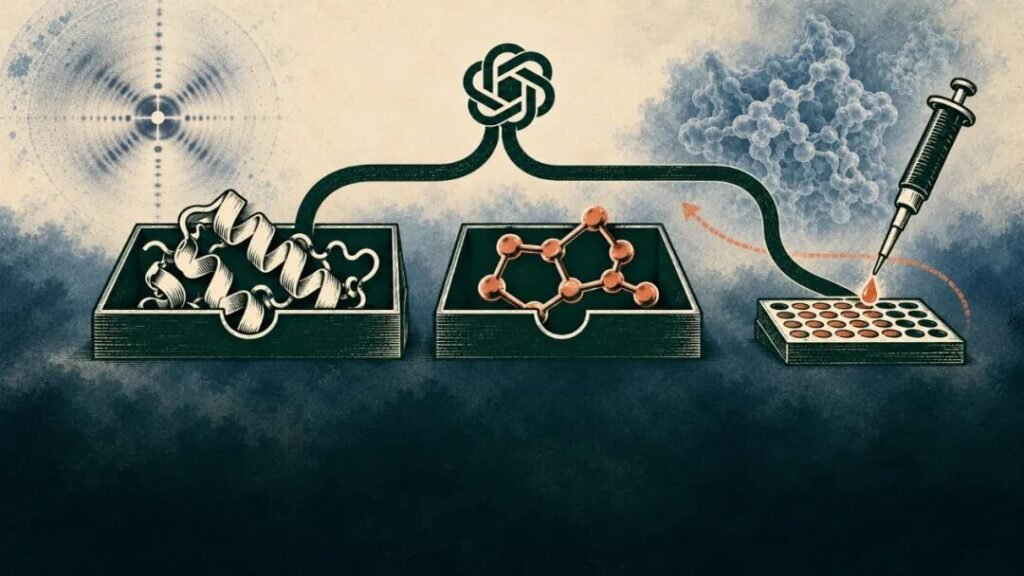
OpenAI quietly launched a new life‑science model, aiming to be a tool supplier for pharma companies
Content Summary
On October 10 local time, tech media TestingCatalog noticed that a not‑yet‑officially‑released model, gpt-ro, quietly appeared on OpenAI’s API pricing page.
On October 10 local time, tech media TestingCatalog noticed that an unreleased model, gpt-rosalind-discovery, quietly appeared on OpenAI’s API pricing page.
It is listed under the “Life Sciences Models” section, right next to the already released gpt-rosalind-research. Both are priced exactly the same: $5 per million input tokens, $0.5 for cached input, $25 for output, roughly on par with the general flagship models. Observers speculate, based on the word “discovery,” that it may primarily target drug discovery.
According to third‑party verification, both the gpt-rosalind-discovery and Rosalind model documentation pages return 404 errors. Apart from the pricing, OpenAI has provided no other information.
Compared with a “shell model” that only has a name and a price, OpenAI’s move to publish a separate “life sciences model” price list is clearly more noteworthy: among general large‑model companies, this may be the first project to assign an independent brand, independent admission review, and continuously iterating model for a specific research field.
Establish a brand dedicated to life sciences
People who frequently follow large model developments may be familiar with “Rosalind”; it has essentially become OpenAI’s life sciences brand.
In April of this year, the company officially launched the life‑science model GPT‑Rosalind, named after British chemist Rosalind Franklin, whose X‑ray diffraction images provided critical evidence for revealing the DNA double‑helix structure.
At launch, the model was made available only as a research preview to eligible corporate customers in the United States, with the first partners including Amgen, Moderna, the Allen Institute, and Thermo Fisher Scientific.
OpenAI later released a new version trained on GPT-5.5, strengthening drug chemistry and genomics capabilities, and expanded the research preview to globally eligible organizations. The model began billing on October 5, is only available to institutions that have passed the Trusted Access Program review, and may be used solely for internal research, not for integration into customer‑facing products.
Currently, the capabilities of the Rosalind platform have formed three delivery pathways: GPT‑Rosalind, the research workspace Rosalind Workbench, and the life‑science plugins in the programming agent Codex that connect to more than 50 scientific tools and data sources.
For this product line, OpenAI envisions consolidating tasks such as literature search, data analysis, sequence processing, and experiment planning—currently scattered across different software—into an environment that can be orchestrated uniformly by a model.
(Source: OpenAI)
This growth business has long been laid out within OpenAI. Before the product’s official debut, OpenAI had already partnered with pharmaceutical companies such as Eli Lilly, Sanofi, Novo to explore AI‑driven drug discovery; in 2025, the company established an internal OpenAI for Science team.
At the beginning of this year, OpenAI announced its most concrete wet‑lab results to date: a partnership with Ginkgo Bioworks to integrate GPT‑5 into the latter’s cloud‑based automated laboratory. AI helped design the experiments while robots carried them out, ultimately reducing the cost of a standard test protein’s reaction raw material from $698 per gram to $422.Ginkgo Bioworks subsequently put the improved reaction formula on the market, creating a complete closed loop where the model drives product development.
Rosalind’s rollout is not limited to commercial customers. At the end of May, OpenAI also launched the Rosalind Biodefense program, opening the model to developers in the biosafety field and certain U.S. government agencies.
The first life‑science model priced for sale
The AI4Bio topic is no longer new. However, based on publicly available information, OpenAI is the first among leading general-purpose large model companies to create a dedicated model entry for life‑science reasoning capabilities.
</p
Google DeepMind is widely recognized as having the deepest accumulation in this field. However, its most famous protein structure prediction tool AlphaFold is primarily made available to the academic community as a research tool; the previously released drug development model TxGemma is also open source, and the “AI co‑scientist” is only opened to a small group through an invitation‑only testing program. As for commercial AI drug discovery, it is independently handled by Isomorphic Labs, which was spun off in 2021.
Some companies also promote platforms, such as Microsoft releasing the cross‑industry research intelligence platform Microsoft Discovery, which allows users to integrate models and tools from other vendors but does not provide dedicated models;Anthropic released this summer an independent product comparable to the programming product Claude CodeClaude Science, which still runs on the general Claude model.
Anthropic life sciences head Eric Kauderer‑Abrams said the company will personally use Claude Science for drug discovery, testing the model’s performance in real‑world scenarios.
After a horizontal comparison, OpenAI’s positioning is becoming clear. Unlike companies such as Anthropic that both sell tools and conduct drug research themselves, it acts as a tool provider, selling specialized models only to pharmaceutical companies, hardly getting involved in pipelines, and model improvements rely mainly on customer usage feedback.
An industry willing to pay for efficiency
Why does OpenAI choose life sciences as its entry point? The reason is that, as price competition for general models intensifies, vendors are increasingly seeking higher‑value vertical scenarios.
Drug discovery is precisely an industry with clear pain points and strong paying ability; its early-stage work relies heavily on manual effort. If models can make target selection more accurate and experimental design better, the benefits will be amplified at each subsequent stage, giving pharmaceutical companies ample reason to pay for it.
Investors also remain optimistic about this sector. According to market research firm PitchBook, since 2019 the AI drug discovery field has cumulatively attracted over $17 billion in investment.
As a comparison, cybersecurity is another high‑growth scenario that OpenAI is also bullish on. Currently, OpenAI’s pricing page already features a separate entry called “Cybersecurity Model,” with the gpt-5.6-cyber listed at $75 per million tokens, which is three times that of Rosalind.
This is another layer of “small ingenuity”: For life‑science business, OpenAI currently seems to place more emphasis on bringing leading pharma companies and research institutions on board, accumulating real‑world use cases, and is not in a hurry to profit from unit pricing.
(Source: OpenAI)
Major model vendors are paving the way for AI4Bio, but the current situation is that the industry still lacks large-scale clinical validation.
Referring to the earlier code that made agents the first market to be deployed, part of the reason is that the results can be run and tested immediately. However, biology relies on wet experiments, even multi-year clinical trials for validation, making it difficult for models to learn and iterate quickly.
In addition to the constraints of development cycles, the reason also lies in the fact that current models can handle specific experimental design, but the direction must be set by humans. This limits AI’s role to merely reducing heavy manual labor, preventing it from extending to more valuable scenarios.
According to Reshma Shetty, co‑founder of Ginkgo Bioworks: Choosing scientific problems worth solving is still something humanity excels at.
Is splitting tasks a good business for vertical model commercialization?
In fact, the commercialization paths of several general‑model companies each have their own challenges: OpenAI must demonstrate that pharma companies can spend money to obtain better R&D decisions, Anthropic faces R&D risks comparable to those of pharma firms, and Google’s business model has been slower to generate standardized revenue.
For model capabilities to be monetized, they inevitably have to involve pharma data and laboratories. Whether a model company can build a moat in life sciences hinges on feedback speed—that is, who can get model recommendations into the lab faster and cheaper and retrieve the results.
Automated labs are a key link in compressing the verification cycle, but currently this layer of infrastructure is not dedicated to any single model company unless the latter spends substantial funds and effort to build it themselves.
Against this backdrop, gpt-rosalind-discovery hints at the next step OpenAI might take: further subdividing tasks in the life‑science domain by different model versions, targeting either broad research or focused candidate molecule screening.
The advantage of this kind of segmentation is that the requirements for the model vary greatly across different research stages. OpenAI can focus on optimizing and evaluating a single stage, and customers can choose models according to their tasks. Once capability is demonstrated in a particular stage, it can be quickly monetized, and pricing can potentially be differentiated based on that.
However, the accompanying challenge is that the various steps in drug discovery are tightly interlinked; the finer the model segmentation, the more important it becomes to ensure seamless integration between them. The two models are currently priced identically, which also suggests that OpenAI may not yet have decided how to reflect the differing positioning of the models.
As of now, the specific use of the discovery model, its relationship with the research model, and the actual benefits have not been disclosed. Whether this path can be successful depends on whether OpenAI can later provide evaluation results and experimental evidence for specific model versions.
Reference content:
https://www.testingcatalog.com/openai-lists-new-gpt-rosalind-discovery-model-in-docs/
https://developers.openai.com/api/docs/pricing
https://openai.com/index/introducing-gpt-rosalind
https://openai.com/index/introducing-new-capabilities-to-gpt-rosalind
https://openai.com/index/gpt-5-lowers-protein-synthesis-cost
https://openai.com/index/strengthening-societal-resilience-with-rosalind-biodefense
https://www.technologyreview.com/2026/06/30/1139987/claude-science-is-anthropics-newest-flagship-product
https://www.orcarouter.ai/blog/gpt-rosalind-discovery-pricing-page-leak
Note: Cover/featured image generated with AI assistance
Get MirrorSpeed