Step Terminal launches its first Agent phone, the STEPXNeoâmakers first.
Step Terminal’s first “Agent Phone” STEPX Neo officially launched, makers lead the way
Summary
Jay 发自 凹非寺量子位 | 公众号 QbitAI期待已久的阶跃终端大模型原生智能体手机STEPX Neo,终于正式亮相。拿到样机半个月,国庆假期我几乎把它当
Jay 发自 凹非寺
量子位 | 公众号 QbitAI
期待已久的阶跃终端大模型原生智能体手机STEPX Neo,终于正式亮相。
拿到样机半个月,国庆假期我几乎把它当成了主力「玩具」,玩得不亦乐乎。
第一眼看到它,我愣了两秒。
这妥妥是个物理版Agent啊!
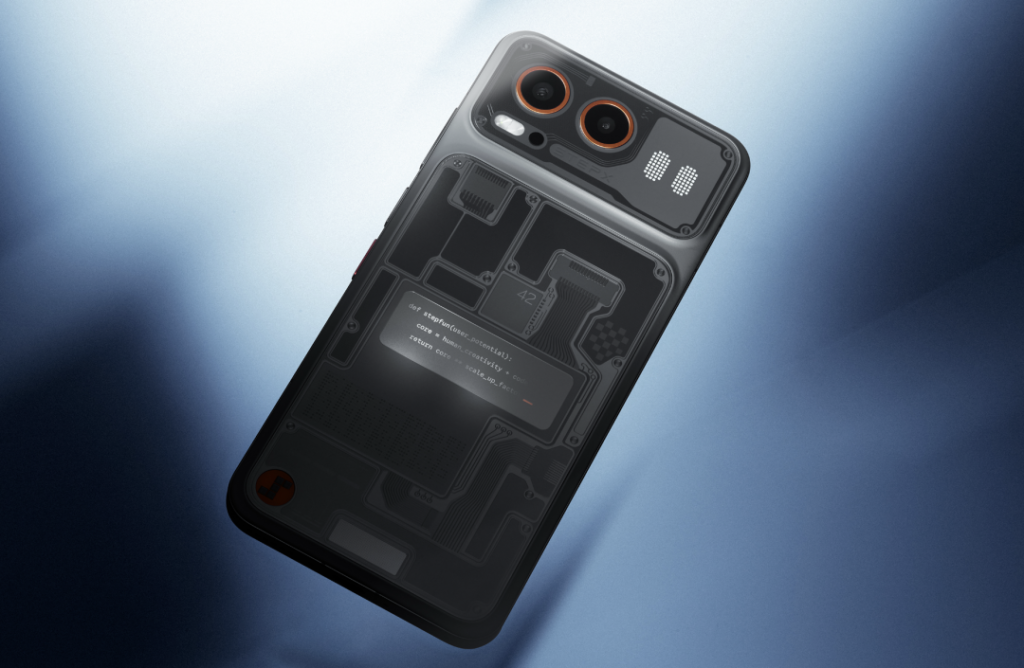
整机以「复古未来美学」为核心设计语言,背板采用磨砂玻璃质感,将早期计算机、赛博电路、AI文明符号与当代消费电子工艺,全部融合在了一起。
大面积膜片纹理代表推理、计算与记忆系统,两者通过电路纹理和透明层次自然衔接。芯片、电池这些平时被严严实实封在后盖里的元器件,毫无保留地展现在眼前。
背后的「42」、「user_potential」代码、图灵测试二进制、深蓝棋盘格和Transformer架构五个彩蛋,串起从科幻想象、机器智能突破到大模型发展的AI探索史。
用我朋友的原话讲:
相当重工,相当极客。
但最戳我的,还是背面上方右侧这块小屏幕。
这是内置个人智能体阶跃Amoo(我习惯叫它A仔)的工作状态区。
平时时不时会探出一只小眼睛,后台执行任务时还会闪过各种状态图标,且支持自定义文本,彩蛋多到数不过来。
属于是社交属性拉满了,这下谁不知道我换了新手机!
当然了,智能体手机嘛,侧边AI键肯定是要有的,颜色同样很引人注目。
轻按呼出输入框,长按直接语音对讲,终于不用在茫茫桌面里翻找App。
外表足够极客,但一台手机到底能不能被称为原生智能体手机,关键还得看系统肚子里有没有真家伙。
所以,开机!!
随时待命的A仔
以往手机里的语音助手,基本是你问一句、它答一句的单向搜索引擎。
STEPX Neo先行版搭载的智能体原生操作系统Step AOS,让逻辑完全变了。
在系统层面支持Loop循环执行、自主Tool Call,还能调取各种Skill和MCP工具,能力非常接近我们在电脑端使唤Codex或Claude Code。
但在日常体验上,用起来又和Muse这类个人助理一样简单,专为C端优化过,A仔有很强的人格化属性,会很积极地利用系统能力和用户交互。
STEPX Neo具备双入口,右滑进入Amoo专属系统级空间,左滑回到熟悉的手机桌面。好玩的是屏幕底部。
iOS习惯把底部做成搜索胶囊或Dock栏,但在Step AOS里,底部常驻着一个微小的折叠面板。
随手点开,是一个系统级的Agent任务导航栏,能看到A仔当前正在后台推进的所有长链路任务,以及之前的任务历史。
A仔什么时候会主动找你?
遇到需要确认的步骤,它会弹窗请示;任务跑完了,它会把结果整理好主动推到你面前。
当然,最骚的还是背屏,你可以直接看到A仔的工作状态。
思考中、Tool Call、输出……这些本来只存在于UI页面上的字段,如今出现在了物理世界。
太手痒了,太手痒了,必须上手把玩一番。
不过吧,平时老在电脑上Vibe Coding,都是做办公效率类的Feature,一下突然换到手机这个场景下,我还真不知道干点啥了。
本来还在冥思苦想,结果转头一看,诶,这咋还有现成的??
是的,A仔自带了个技能入口,里面有各种各样已经打磨好的Skill,你可以直接装了玩。
比如简历分析、数据分析这些Skill。
但说实话,我一直觉得,手机这个终端,就不太适合用来做办公效率类的事,它最高的价值,还得是在生活场景。
所以一番闲逛后,我选了这个叫「全能英语助手」的,装上了。
A仔原地升级专属英语老师,查单词、拆解长难句都是基本功,但最有用的是——
它能按艾宾浩斯记忆曲线制定学习计划。
泪目了,梦回当年考研每天怒啃单词书的日子,现在也是吃上好的了。
但是吧,说实话,通过对话框背单词还是蛮奇怪的,谁没事一天到晚打开对话框调用Skill。。。
于是我装上飞书CLI,直接给A仔下达指令:把每天要学的新词生成定时任务,自动同步到我的飞书日历,新单词详情以备注形式写入。
一通操作下来,系统、工具与第三方接口,全部打通,并且全是靠的后台Tool Call和脚本,不走模拟点击,速度非常快。
完美融入我已有的SOP,以后每天早上起来看当日待办时,顺手就给单词背了。
对了,除了Skill,你还能在社区直接装Agent。
比起单独的Skill会封装得更好一点,包里还会有SOUL、AGENTS这些文件,可自主运行,甚至组合调用SKILL。
我最爱的是这哥们,「打碟Agent」。
太抽象了,装上之后手机秒变口袋DJ台,聚餐随时一掏,保证你成为话题中心嗷(bushi)。
AI创客的积木盒
为什么电脑端Agent这么猛了,但在传统手机上,Agent好像还是啥也干不了?
核心在于第一性原理的不同,手机OS的底层是围绕「人手点击图形界面」搭建的。
Agent想要跨软件办点事,全靠笨拙的视觉识别和模拟点击GUI。页面一旦稍微改版、权限弹窗一拦,整条任务链路瞬间断裂。
STEPX Neo走的是另一条路,A仔在Step AOS里是系统原住民。
模型、操作系统与硬件感知底层协同,Agent能够直接调用系统能力,而不是悬浮在屏幕最上层抓瞎。
当然,光有底层通道肯定是不够的。
C端日常需求是极度长尾的,一个Agent再强,也不可能凭空包揽订票、打车、支付和剪辑等场景,没有生态支持你是拿不到Tool的。
这还智能体个啥,智能不了一点。
但STEPX Neo似乎有点不一样。
打开手机,你会发现各类常用服务生态已经就绪,A仔执行过程的Tool Call中,可以直接以Skill等多种方式调用相应功能,比如叫车、领券。
是的,STEPX Neo已经提前帮你把很多高频场景,封装成了系统级工具。
而作为服务方的APP们,也是支持A仔的。
阶跃终端通过A2A、MCP等多种智能体连接协议与三方生态打通,同时提出H2A2A(Human to Host Agent to Service Agent),即由用户向阶跃Amoo表达需求,再由阶跃Amoo调用专业服务智能体完成任务。
有了这层底座,外部生态就可以直接接入,把专业服务开放给终端调度。
这时候,就不得不提阶跃端侧带来的另一大重磅杀器——Step Studio。
它是个AI终端原生开发工具,提供了一个专用于编写、测试和管理代码的软件工作空间,内置强大的AI功能,帮助开发者更快、更智能地工作。
过去给手机增加一项新能力,你得从头开发一个体量庞大的App;Codex等Agent的出现降低了Feature创作门槛,但终究局限于电脑端,很多任务也得围绕Web展开。
如今在Step Studio和Step AOS的加持下,手机也终于可以被创客把玩。
原生内置各类连接器,开发者只需要写好SKILL.MD,就能直接把Agent、外部API和手机系统能力像胶水一样粘在一起。
这一下解决了我的实测便秘(bushi)。
前面我不是在社区逛了一圈,结果发现,一台智能体手机,居然还没人关心AI圈资讯!
太遗憾了,我直接搓一个「每日椅子爆炸」APP(bushi)。
就是一个简单的垂直信息流APP,在Step Studio中Step 5 Preview,很快就做完了。
右侧内置预览页,你可以在这里直接试用或评论修改,代码所见即所得。
测试完没问题,直接推送真机测试。
也是很方便,扫码都不用,只要你登录的是同一个账号,STEPX Neo可以看到你在Step Studio搓的任何东西。
直接下载APK安装包就是。
APP图标也是很搞,完美符合我的「核弹」设计理念。
Duang,打开就能用,和Step Studio里的预览效果一模一样,点击可查看原文。
泪目,以后早起连公众号都不用翻了,躺在床上就能看「原子弹爆炸」,方便瘫软o(╥﹏╥)o。
但如果你想,Step Studio也可以搓Agent和Skill,同样可以调用手机端连接器,云端模型做好后,可以直接推送到终端用。
所以,这样一台Agent原生手机,多少钱?
3999元。
软硬膜全栈定价打包出售。3999元,你将获得一部Agent手机,外加包年Token Plan。
是的,买STEPX Neo先行版的用户可享受连续12个月、每月百亿Token使用额度的STEPX Token Plan。
与此同时,STEPX还推出了个「阶跃Amoo成长计划」,也是很有趣。
前1万名任务达标用户将获得「星辰船票」,在未来五年内,凭STEPX Neo可0元置换任意一款STEPX新款终端。
底座得「安全有界」
不过,体验到这里,一个问题不可避免地冒了出来——
权限这么高,失控了咋整啊。。。
它会不会背着我偷偷买东西?会不会把我的私密照片和聊天记录发到网上?
个人助理这件事,还是蛮危险的。年初OpenClaw那波,简直了,一堆实例带着API和个人信息在互联网裸奔。
关键是网上真的很多「坏叔叔」啊!各种提示词下毒的,开源Skill社区也属于沦陷了,跟玩扫雷一样,不知道哪个一装发现是木马。
STEPX Neo如何解决这个问题?
答案是——系统级原生安全。
翻开STEPX Neo的系统设置,你会发现里面单独列出了一个模块,就叫智能体安全。
你可以在这个页面,直接管理A仔相关权限,并查看可视化的Tool Call记录。
这个Feature能干啥?
具体而言,阶跃终端在Step AOS里搭了一套可信、可见、可控、可逆的安全底座:
-
可信:对所有上云数据做脱敏,手机号、精确定位和敏感的多模态画面不会被无底线拿去裸跑。
-
可见:所有工具调用、权限申请和执行链路全程留痕,A仔到底动了哪些数据,在任务面板里一目了然。
-
可控:遇到删除、支付、跨应用操作等高风险节点,绝不自作主张,必须弹窗触发用户的二次确认,授权边界随时可以一键撤销。
-
可逆:给小白准备的终极后悔药,智能体误删的照片、文件、笔记或者联系人,系统支持分步或整体恢复。
生态方面同样也是原生安全的。
为了让你安心使用社区的Skill和Agent,阶跃终端官方亲自下场,在源头就立了规矩:
所有发布者,必须完成与手机号一致的实名认证,Skill和Agent全部是实名制;
此外,只要检测到包内混入了.env、各类密钥文件、数据库、日志或是USER.md这类包含运行时隐私的文件,系统会立刻阻断上传。
这或许也是STEPX Neo能在生态上走这么远的原因。
安全底座扎得越深,生态的大门才敢开得越宽。
正因为每一步调用都有清晰的权限隔离与审计边界,生态各方才敢放心把真实服务能力通过H2A2A开放给阶跃Amoo;普通创客也才敢把自己手搓的Agent真正丢进手机里跑日常任务。
在个人智能体(Personal Agent)时代,行业比拼的重心正在发生转移。
过去大家死磕模型参数和榜单跑分;但在终端落地阶段,用户的托付意愿才是最大的规模瓶颈。
没有安全底座,再聪明的Agent也只能关在沙盒里做文字游戏。
谁能用原生架构把安全边界立住,谁才敢说拿下了个人智能体时代的入场券。
该做硬件了
在每一次技术爆发周期里,跑在最前面的永远是云端软件,大模型和各类Agent概莫能外。
但想要把体验推向极致,软硬件一体化始终是一条绕不开、但也最坚固的路径。
正如计算先驱Alan Kay在1982年留下的那句名言:
People who are really serious about software should make their own hardware.
(真正认真对待软件的人,应该自己做硬件。)
这句话后来深深启发了史蒂夫·乔布斯。
乔布斯曾直言:
苹果最大的秘密,就是我们把自己看成一家软件公司。
iPod是软件——它在电脑里是软件,在云端是软件,装在那个漂亮的盒子里也还是软件。Mac是什么?Mac就是OS X。它住在一个漂亮的盒子里,但它本质是OS X。
在各种云端Agent漫天飞舞的当下,阶跃终端选择做STEPX Neo与Step AOS,或许,同样是在践行这一产品哲学:
用软硬模一体化的确定性,把充满无限可能但也伴随不确定性的智能体,装进一个安全、可控的盒子里。
一键三连「点赞」「转发」「小心心」
欢迎在评论区留下你的想法!
— 完 —
🌟 点亮星标 🌟
I stared at it for a couple of seconds at first glance.
This is definitely a physical‑world Agent!
The whole device is built around a “retro‑future aesthetic” design language, with a frosted‑glass back panel that blends early computers, cyber circuits, AI civilization symbols, and modern consumer‑electronics craftsmanship into one.
Large‑area membrane textures represent the reasoning, computing, and memory systems, naturally linked by circuit patterns and transparent layers. Components like the chip and battery, usually sealed tightly in the rear cover, are displayed openly for all to see.
The five Easter eggs—“42”, “user_potential” code, Turing test binary, Deep Blue checkerboard, and the Transformer architecture—link together the AI exploration history from sci‑fi imagination and breakthroughs in machine intelligence to the development of large models.
In my friend’s own words:
Very heavy‑duty, very geeky.
But the thing that really hits me is the small screen on the upper right side of the back.
This is the work status area of the built‑in personal AI agent Step Amoo(I usually call it A‑boy).
It occasionally peeks out a little eye, flashes various status icons when running background tasks, supports custom text, and has countless Easter eggs.
It’s basically maxing out the social aspect, now who doesn’t know I got a new phone!
Of course, for a smart phone, it must have a side AI button, and the color is equally eye‑catching.
Tap lightly to bring up the input box, long‑press for direct voice communication, finally no more digging through a sea of apps on the home screen.
The exterior may look geeky enough, but whether a phone can truly be called a native intelligent-agent phone ultimately depends on whether the system’s core actually contains the real thing.
So, power on!!
Always‑ready A‑boy
In the past, voice assistants on phones were basically one‑way search engines: you ask a question, it gives an answer.
The STEPX Neo preview edition runs the native intelligent‑agent operating system Step AOS, which completely changes the logic.
At the system level it supports Loop iterative execution, autonomous Tool Calls, and can invoke various Skills and MCP tools, capabilities that are very close to what we command Codex or Claude Code on a computer.
But in everyday use, it’s as simple as personal assistants like Muse, optimized specifically for consumers, and A‑Zai has strong personality traits, actively leveraging system capabilities to interact with users.
STEPX Neo features dual entry points: swipe right to enter the Amoo‑exclusive system‑level space, swipe left to return to the familiar phone home screen. The fun part is the bottom of the screen.
iOS usually places a search capsule or Dock bar at the bottom, but in Step AOS, a tiny collapsible panel resides permanently at the bottom.
Tap it casually, and you get a system‑level Agent task navigation bar, where you can see all the long‑chain tasks that A‑Zai is currently pushing in the background, as well as the history of previous tasks.
When will A‑Zai proactively reach out to you?
When a step requires confirmation, it will pop up a prompt; after a task finishes, it will organize the results and proactively push them to you.
Of course, the coolest part is still the back screen—you can see A’s work status directly.
Thinking, Tool Call, Output… these fields that used to exist only on UI pages are now appearing in the physical world.
Can’t resist the urge—have to get hands‑on and play with it.
But, usually I’m vibing on the computer, working on office‑efficiency features, and suddenly switching to a mobile scenario, I really have no idea what to do.
I was still racking my brain, then I turned around and saw,hey, why is there already something ready-made??
Yes, A‑Zai comes with a skill portal that contains a variety of polished skills you can just install and play with.
For example, skills like resume analysis and data analysis.
But to be honest, I’ve always felt that a phone isn’t really suited for office‑productivity tasks; its greatest value lies in everyday life scenarios.
So after some wandering, I chose this app called “All‑Purpose English Assistant” and installed it.
A‑Zai instantly upgraded to a personal English tutor; looking up words and breaking down complex sentences are basic skills, but the most useful feature is—
it can create a study plan based on the Ebbinghaus forgetting curve.
Tears in my eyes, reminiscing about the days of grinding through vocabulary books for the graduate exam—now I can afford the good stuff.
But honestly, memorizing words through a dialog box feels pretty odd,who spends all day opening a dialog box to call a Skill…
So I installed the Feishu CLI and directly gave A‑Zai a command: generate a scheduled task for the new words I need to learn each day, automatically sync it to my Feishu calendar, and write the new word details as notes.
After a single operation, the system, tools, and third‑party interfaces are all connected, and it relies entirely on backend tool calls and scripts without any simulated clicks, so it’s very fast.
It fits perfectly into my existing SOP, so every morning when I check the day’s tasks, I can conveniently review vocabulary.
By the way, besides Skills, you can also install Agents directly from the community.
Compared to a standalone Skill, it’s packaged a bit better; the bundle also includes files like SOUL and AGENTS, can run independently, and even combine calls to SKILL.
My favorite is this guy, “DJ Agent”.
It’s so abstract—once installed, your phone instantly becomes a pocket DJ console, ready to pull out at any gathering, guaranteeing you become the center of attention.(just kidding).
AI Maker’s Block Box
Why is the desktop Agent so powerful, yet on traditional phones the Agent still seems unable to do anything?
The core lies in a different first principle: the phone OS is built around “human taps on a graphical interface.”
When an Agent wants to act across apps, it relies on clumsy visual recognition and simulated GUI clicks. If the page changes slightly or a permission popup appears, the entire task chain breaks instantly.
STEPX Neo takes a different route, A‑Zai is a native system component in Step AOS.
The model, operating system, and hardware perception collaborate at the low level, allowing the Agent to call system capabilities directly instead of floating on the top of the screen blindly.
Of course, having just a low‑level channel is definitely not enough.
Consumer‑facing daily needs are extremely long‑tail; no matter how powerful an agent is, it can’t magically handle ticket booking, ride‑hailing, payments, editing, and other scenarios without ecosystem support—you won’t get the tools without it.
That’s hardly an intelligent agent at all—it’s not smart in the slightest.
But STEPX Neo seems to be a bit different.
When you open your phone, you’ll find that various common service ecosystems are already set up. In the agent’s Tool Call execution process, you can directly invoke the corresponding functions in multiple ways, such as Skills, for tasks like ride‑hailing or coupon collection.
Yes, STEPX Neo has already pre‑packaged many high‑frequency scenarios into system‑level tools for you.
And the apps that act as service providers also support A‑Zai.
The Step terminal connects with third‑party ecosystems through various intelligent agent protocols such as A2A, MCP, etc., and also introduces H2A2A (Human to Host Agent to Service Agent), meaning the user expresses a request to Step Amoo, which then invokes a specialized service agent to complete the task.
With this foundation, external ecosystems can connect directly, opening professional services to terminal scheduling.
At this point, we have to mention another heavyweight weapon brought by the stepwise edge—Step Studio.
It is an AI-native development tool for terminals, providing a dedicated software workspace for writing, testing, and managing code, with built‑in powerful AI capabilities that help developers work faster and smarter.
In the past, adding a new capability to a phone required developing a massive app from scratch; the emergence of agents like Codex lowered the barrier to creating features, but they remained confined to the desktop, and many tasks still had to revolve around the web.
Now, with the support of Step Studio and Step AOS, phones can finally be tinkered with by makers.
It natively includes various connectors; developers only need to write a SKILL.MD, and can directly glue agents, external APIs, and phone system capabilities together.
This finally solved my real‑world constipation(bushi).
Earlier I was browsing the community and discovered that no one even cares about AI‑circle news on a smart‑agent phone!
What a pity, I’ll just whip up a “Daily Chair Explosion” APP(bushi).
It’s just a simple vertical feed app; in Step Studio, Step 5 Preview, it was completed quickly.
The built‑in preview page on the right lets you try it out or comment and edit directly here; what you see in the code is what you get.
After testing with no issues, push it straight to a real device for testing.
It’s also very convenient; no need to scan any QR code. As long as you’re logged into the same account, STEPX Neo can see everything you create in Step Studio.
Just download the APK installation package.
The app icon is also very cool, perfectly fitting my “nuclear bomb” design concept.
Bang, just open it and it works, exactly the same preview effect as in Step Studio, click to view the original text.
Tears, from now on I won’t even need to scroll through public accounts early in the morning,just lying in bed I can watch “Atomic Bomb Explosion,” so conveniently lazyo(╥﹏╥)o.
But if you want, Step Studio can also craft Agents and Skills, and similarly invoke the mobile connector; after the cloud model is ready, it can be pushed directly to the terminal for use.
So, how much does an Agent-native phone cost?
¥3,999.
A full-stack hardware and software package priced at ¥3,999 includes an Agent phone plus an annual Token Plan.
Yes, users who purchase the STEPX Neo pre‑release edition can enjoy a STEPX Token Plan with a monthly allocation of 10 billion tokens for 12 consecutive months.
At the same time, STEPX also launched a “Step Amoo Growth Plan,” which is quite fun.
The first 10,000 users who meet the task requirements will receive a “Starship Ticket,” allowing them to exchange any new STEPX device for free with a STEPX Neo within the next five years.
The base gets “secure boundaries”
However, after experiencing this far, an inevitable question arises—
With such high permissions, what if it goes out of control…
Could it secretly make purchases behind my back? Could it post my private photos and chat logs online?
Having a personal assistant is actually quite risky. The OpenClaw incident earlier this year was a disaster—so many examples exposing APIs and personal data running naked on the internet.
The key is that there are really a lot of “bad uncles” online! Various prompts are poisoned, the open‑source Skill community has also fallen, and it’s like playing Minesweeper—you never know which one you install might be a trojan.
How does STEPX Neo solve this problem?
The answer is—system‑level native security.
When you open STEPX Neo’s system settings, you’ll find a separate module called Agent Security.
On this page, you can directly manage permissions related to Agent A and view visualized Tool Call logs.
What can this feature do?
Specifically, the step terminal builds a set oftrustworthy, visible, controllable, reversible security foundations in Step AOS:
Trustworthy: All cloud data is anonymized; phone numbers, precise location, and sensitive multimodal images will not be indiscriminately used raw.
Visible: All tool invocations, permission requests, and execution traces are fully logged, making it clear which data A‑Zai has accessed, visible at a glance in the task panel.
Controllable: When encountering high‑risk actions such as deletion, payment, or cross‑app operations, the system never acts on its own; it must prompt a pop‑up for the user’s secondary confirmation, and authorization boundaries can be revoked with a single click at any time.
Reversible: The ultimate antidote for beginners—if the AI mistakenly deletes photos, files, notes, or contacts, the system supports step‑by‑step or full recovery.
The ecosystem is also natively secure.
To give you peace of mind when using community Skills and Agents, the official Step Terminal team steps in and sets the rules at the source:
All publishers must complete real‑name verification that matches their phone number; Skills and Agents are fully under a real‑name system;
In addition, as soon as the system detects that the package contains .env files, various key files, databases, logs, or files like USER.md that contain runtime privacy information, it will immediately block the upload.
This may also be why STEPX Neo has been able to go so far in its ecosystem.
The deeper the security foundation, the wider the ecosystem can open its doors.
Because each call has clear permission isolation and audit boundaries, all parties in the ecosystem can confidently expose real service capabilities through H2A2A to Step Amoo; ordinary makers can also safely drop their hand‑crafted agents into phones to run daily tasks.
In the era of (Personal Agent), the focus of industry competition is shifting.
In the past, everyone fought over model parameters and leaderboard scores; but at the deployment stage, users’ willingness to trust is the biggest scaling bottleneck.
Without a secure foundation, even the smartest agent can only stay in a sandbox playing text games.
Whoever can establish security boundaries with a native architecture can claim to have secured a ticket to the personal agent era.
Time for hardware
In every wave of technological breakthroughs, cloud software, large models, and various agents are always at the forefront.
But to push the experience to the extreme, hardware‑software integration remains an unavoidable—and the most solid—path.
As computing pioneer Alan Kay famously said in 1982:
People who are really serious about software should make their own hardware.
(真正认真对待软件的人,应该自己做硬件。)
This sentence later deeply inspired Steve Jobs.
Jobs once said directly:
Apple’s biggest secret is that we see ourselves as a software company.
The iPod is software—it’s software on a computer, software in the cloud, and even when placed in that beautiful box, it’s still software.What is a Mac? A Mac is OS X. It lives in a beautiful box, but its essence is OS X.
In an era where cloud agents are everywhere, the Leap terminal chooses to create STEPX Neo and Step AOS, perhaps also embodying this product philosophy:
With the certainty of integrated hardware‑software modeling, we pack an intelligent entity full of limitless possibilities yet accompanied by uncertainty into a safe, controllable box.
One-click Triple Action“Like” “Share” “Heart”
Feel free to leave your thoughts in the comments!
— End —
🌟 Light Up the Star 🌟
Get MirrorSpeed
Get MirrorSpeed