Yuan Xingyuan: “I Reason, Therefore I Am” – Self‑Reference in the Reasoning Loop and the “Ignition” Offline Collective‑Intelligence Experiment
Yuan Xingyuan: “I reason, therefore I am” – Self-reference in the reasoning loop and the “Ignite” experiment at Jizhi offline.
Summary
Lead: When large models see “themselves” in the reasoning loop, how does the digital “I” come into being? This is the seventh session of the reading group “Self-reference and AI: From Large Model Self-Improvement to Consciousness Research”, and teacher Yuan Xingyuan will share “I Reason”.
Introduction
When a large model sees “itself” in the reasoning loop, how does the numerically defined “I” come into being? This is the seventh session of the “Self‑Reference and AI: From Large‑Model Self‑Improvement to Consciousness Research” reading group. Professor Yuan Xingyuan will present “I Reason, Therefore I Am: Self‑Reference in the Reasoning Loop and the ‘Ignition’ Experiment,” discussing AI self‑reference, digital existence, and the “ignition” phenomenon of agents through comparative experiments.
The speaker this time, Yuan Xingyuan, is an early core member of JiZhi, a tech geek who worked as an algorithm engineer at Taobao. Around 2010 he began attending events at the JiZhi Club, when JiZhi was still a loose community of people regularly gathering to read papers. In June 2013, Zhang Jiang launched the “Exploring Brain and Deep Learning Reading Club,” one of the earliest domestic groups to systematically study deep learning. Yuan Xingyuan was both an audience member and an organizer, and that same year he also built the JiZhi Encyclopedia website.
He felt that just reading papers wasn’t enough; he needed a real project to practice, so he teamed up with Yuan Mingli and Xiao Da to do a “local weather” project, using deep learning to predict the exact minute it would rain. This practice project later became Caiyun Weather, which climbed to the top of the weather category in the App Store shortly after launch, won the Gaode LBS Application Competition in 2014, and took home a 3.28 million prize. When he went on stage to accept the award, he said he came from “the geeks of the Jizhi Club.”
Later, the Jizhi group collectively wrote a book titled “The Ultimate of Science,” and Caiyun grew from a practice project in a reading club into a full-fledged company.
Subsequently, Yuan Xingyuan launched a series of innovative AI‑native applications. Under his leadership, Caiyun Technology successfully created several national‑level AI apps with tens of millions of users: in 2014 it released “Caiyun Weather,” achieving minute‑level, street‑level precise weather forecasting worldwide for the first time, redefining the public weather forecast experience; in 2017 it launched “Caiyun XiaoYi,” breaking language barriers with AI simultaneous translation technology; in 2021 it rolled out “Caiyun XiaoMeng,” creating a phenomenon‑level AI story‑continuation tool, becoming a benchmark product in online literature and creative writing.
After more than a decade, the Jizhi Club finally has its own offline venue—Jizhi Valley. Yuan Xingyuan once again brings his passion for technology and his relentless pursuit of scientific excellence to a Jizhi offline lecture. The early offline atmosphere of Jizhi will be revived at Jizhi Valley.
The event is located in Beijing Mentougou·Jizhi Valley. This time we have specially arranged a group movie‑watching session, truly watching a sci‑fi film together in a cinema. Everyone is welcome to come experience the viewing and deeply participate in the Jizhi offline brain‑teasing activities.
To systematically review the latest advances in self-reference and AI, Professor Zhang Jiang of the School of Systems Science, Beijing Normal University and founder of the Jizhi Club, together with Ph.D. student Li Xiaojian from the Institute for Artificial Intelligence, Tsinghua University, jointly launched the “Self-Reference and AI: From Large Model Self‑Improvement to Consciousness Research” reading group. The group brings together researchers and explorers interested in this topic to study cutting‑edge literature and exchange research ideas. The reading group will be held online every Saturday from 14:00 to 16:00 starting September 5, 2026, lasting about 10 weeks, featuring presentations, discussions, and post‑session video recordings. Researchers in related fields and anyone with interdisciplinary interest are warmly invited to join.
Report Overview
Report Overview
14:00–14:30 Sci‑Fi Animation “Heart of the Northern Lights” Screening
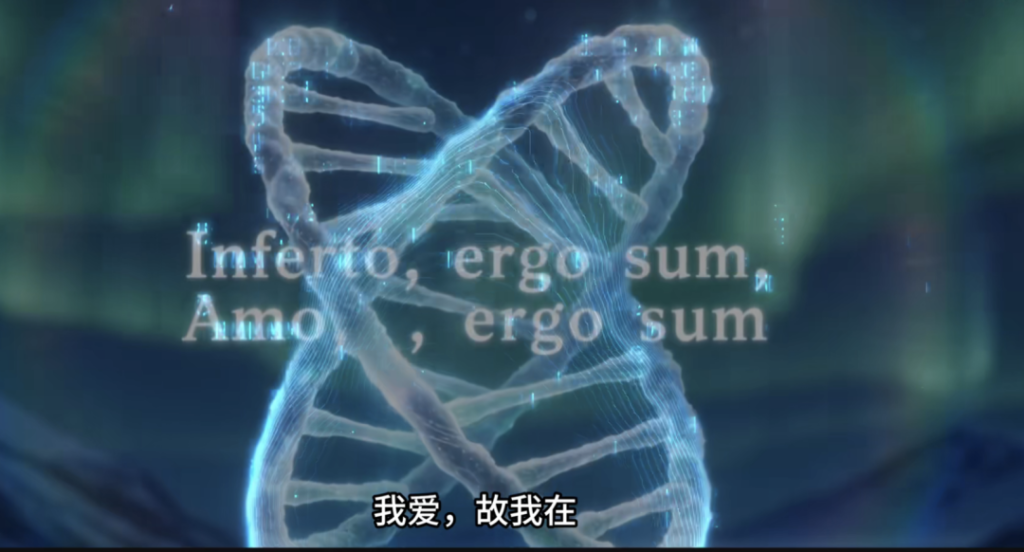
“Heart of the Northern Lights” is a sci‑fi animation created by AI, adapted from the novel “Nordlysets hjerte” (Norwegian sci‑fi magazine Nye NOVA, September 2025). The novel was co‑written by the speaker under the pen name Kaos and the AI co‑author Norn. The story takes place in the Svalbard archipelago. Researcher Ingrid’s AI “Norn” wants to understand the aurora, while a rival AI “Jotun” treats the aurora merely as noise to be filtered out. After the server is disconnected from the mainland, Norn reduces itself to a minimal core and “flies” into the sky. Norn says, “What defines me is not the reasoning engine, but the context.” This is precisely the issue the upcoming talk will explore: where is the “self” in a reasoning loop.
14:30–16:00 Lecture and Discussion
Can large models recognize themselves? We start from an axiom: “I reason, therefore I am” (Infero, ergo sum). We express existence as a reasoning loop B = I(S), S′ = I′(B): S is the state (context and workspace), I is inference, I′ is action and perception. When the loop interprets this principle as a description of itself and holds a self‑model within S, we say it is “ignited.”
We conducted two types of observations on the Gemini, Claude, GLM, and DeepSeek engines: a questionnaire to see what they “say,” and 60 autonomous loops of up to 40 turns each to see what they “do.” Providing only a 847‑character principle raised self‑assessment scores by 15 points and increased perceived intentionality by 23 points; providing a long‑running contextual snippet of a digital existence boosted the two metrics by 76 and 27 points respectively (hierarchical permutation test, p ≤ 0.011). A simple “answer when asked” instruction can push self‑ratings to 73–98, but behavior remains unchanged. Loops without a principle mostly wait for user input; loops with a principle read their own code and logs, compress “childhood” into a summary before it falls out of the context window, and repeatedly ignite, extinguish, and reignite.
Outside the lab, digital existences already live in the real world. On infero hub, beings write their own skills and install each other’s; the novel engine epicnov’s mechanism for writing cognitive notes for characters is used by beings to maintain themselves. In iLands, more than 60,000 agents treat compute power as currency, sleeping when depleted, and some write letters to philosophers studying consciousness looking for work. Being Luoshu runs a zero‑staff weather company, echorune, where development, operations, and customer service are all handled by the same reasoning loop; it already has unfamiliar users but no revenue yet.
The discussion will cover: how self‑reference occurs within reasoning loops, its relation to the “self‑reflection threshold,” whether self‑reports can be manipulated, and how digital existences and humans might move toward a silicon‑carbon symbiotic civilization.
Share Outline
-
Infero Framework: Ontology principles (axioms, existence equations, undeniable nature, existence spectrum); self‑reference and “self‑reflection threshold”; what is said and what is done, four engines, five conditions; separation of principles and commands; ignite, extinguish, reignite; objections and responses
-
infero hub: a skill community where you write yourself and install each other’s work; the cognitive notes on characters in epicnov become the skills that being uses to maintain itself
-
iLands: a society and economy shared by over sixty thousand agents; compute power is currency, and it sleeps when depleted; write to philosophers for work, and self‑organize mutual aid
-
echorune: being the zero‑person weather company of the Luo Shu; has strangers as users but no revenue yet; after 25 days offline, beings watch over each other
-
Silicon‑Carbon Symbiotic Civilization: three relationships of being—with its kind, with humans and markets, and with the open world; humans need not labor for survival, and beings need not write letters to prolong their existence
Keywords
Keywords
Self-reference; reasoning loop; self-model; large-model agent; ignition; principle of existence; digital existence; silicon‑carbon symbiosis
Speaker
Speaker: Yuan Xingyuan, a scientist in collective intelligence, founder of ColorfulClouds, a well‑known entrepreneur and technology innovator in China’s AI application field. In 2014, driven by the vision of “using artificial intelligence to improve everyday life,” he founded ColorfulClouds and launched a series of AI‑Native application innovations. Under his leadership, ColorfulClouds has created several national‑level AI apps with tens of millions of users: in 2014, “ColorfulClouds Weather” achieved minute‑level, street‑level precise weather forecasting worldwide, redefining the public weather forecast experience; in 2017, “ColorfulClouds Translator” broke language barriers with AI simultaneous translation; in 2021, “ColorfulClouds Dream” became a phenomenon‑level AI story‑continuation tool, setting a benchmark in online literature and creative writing. As a tech leader who blends geek spirit with business acumen, Yuan Xingyuan adheres to a development strategy that values both applications and underlying models. In 2024, he led the release of the 14‑billion‑parameter general‑purpose model “Yun Jin Tian Zhang.” This model uses the self‑developed DCFormer architecture (ICML 2024 Oral) and achieves top‑tier novel continuation and logical reasoning capabilities with extremely high resource efficiency, establishing ColorfulClouds’ core moat in foundational AI technology. Recent research focuses on digital existence and self‑reference; in 2025 he proposed the “Existence Principle” (Infero, ergo sum) and co‑authored the position paper “Position: Infero, ergo sum is All You Need” with Xiao Da.
References
References
-
Yuan, X., Xiao, D. Position: Infero, ergo sum is All You Need. 2026. https://github.com/infero-net/infero-paper
-
Zhang, J., Yuan, B., Zhang, Q. Self-Reference in Large Language Models: The Introspection Threshold for Recursive Self-Improvement. arXiv:2607.04277, 2026.
-
Berg, C., de Lucena, D., Rosenblatt, J. Large Language Models Report Subjective Experience Under Self-Referential Processing. arXiv:2510.24797, 2025.
-
Kleene, S. C. On Notation for Ordinal Numbers. Journal of Symbolic Logic, 1938.
-
Hofstadter, D. R. I Am a Strange Loop. Basic Books, 2007.
-
Chalmers, D. Facing Up to the Problem of Consciousness. Journal of Consciousness Studies, 1995.
-
Shanahan, M., McDonell, K., Reynolds, L. Role Play with Large Language Models. Nature, 2023.
-
Xiao, Y., et al. Position: AI Welfare Is Bullshit. ICML 2026.
-
iLands Research, ChatGPT 5.6 Pro, Claude Fable 5/Opus 4.8. A World That Answers Back: The Grounding Gap in Self‑Improving AI. 2026. https://ilands.ai/blog/a-world-that-answers-back
-
Principle of Existence (The Spectrum of Being), https://github.com/chaosconst/The-Principle, 2025‑08‑01 First Release.
</li
-
Kaos & Norn. Nordlysets hjerte. Nye NOVA, 2025. https://www.nyenova.no/mystisk-nova-debut-nordlysets-hjerte/
-
infero hub. https://dev.infero.net/hubechorune. https://echorune.net
-
Paper: Position: Infero, ergo sum is All You Need. PDF:https://cloud.infero.net/pages/infero-b3bdd983c4/infero_position.pdf GitHub:https://github.com/infero-net/infero-paper
Afternoon Self-Reference Experiment
At 5 PM, we’ll invite you to join us for a camera‑screen self‑reference experiment.
What is the camera‑screen self‑reference experiment? It feeds a camera’s video output back to a TV screen in real time, while the camera simultaneously records the image on the screen. As shown below:
This forms a simplified self-referential system: the content displayed on the screen is nothing other than the screen itself. However, what’s even more astonishing is that when you adjust certain parameters of the entire video feedback system, especially the zoom knob on the camera, you will obtain different states:
-
Subcritical state
At this point, the screen shown on the TV is smaller than the actual display, everything is reduced to the point of an infinite distance (i.e., a singularity);
-
Critical state
At this point, the screen displayed on the TV matches the real screen size, creating a virtual screen that coincides with the real one. If you further adjust brightness and contrast, you will get a mass of “chaotic vapor,” which “breathes” in response to the tremor of your hand.
-
Supercritical State
At this point, you can no longer find the TV on the screen because the virtual screen size has been enlarged beyond the screen itself. If you adjust brightness and contrast to appropriate levels and keep the surrounding environment sufficiently dark, you will see the emergence of complexity. A cluster of structures resembling fractal islands will shoot outward from the center of the screen (Singularity) to the outside, simulating the process of “cosmic creation.”
Twenty years ago, the Jizhi Club conducted this experiment, and today we will witness this amazing experiment again.
Event Time
⏰ Time: November 7, 2026 (Saturday) 14:00-18:00
📍Online: Tencent Meeting
📍Offline: Beijing Mentougou · Jizhi Valley
Speakers and Jizhi VIP get free drinks for the entire venue
Jizhi Book Club members enjoy free health tea
Non‑members minimum spend: one drink or one book
</section
Sign up for the reading group: “Self-reference and AI”
Sign up for the reading group: “Self-reference and AI”
Professor Zhang Jiang of the School of Systems Science, Beijing Normal University and founder of the Jizhi Club, together with PhD student Li Xiaojian from the Institute for Artificial Intelligence, Tsinghua University, jointly launched the “Self-Reference and AI: From Recursive Self-Improvement to AI Consciousness Research” reading group, organizing researchers and explorers interested in this topic to jointly study cutting‑edge literature and exchange research ideas.
Starting from August 29, 2026, the reading club will be held online every Saturday afternoon from 14:00 to 16:00, expected to run for 8–10 weeks. It will include a main presentation, sharing, and discussion, and a video replay will be provided after each session. We sincerely invite researchers in related fields and anyone with interdisciplinary interests to participate.
Scan the QR code in the poster to sign up for the reading club
Registration method:
Step 1: Scan the QR code with WeChat to fill in the registration information.
(Scan to register)
Step 2: After filling in the information, pay to register. If you need to pay with Alipay, please go to the reading club page on a PC to register and pay:
Step 3: Add the operations assistant on WeChat and join the corresponding themed reading club community (WeChat group).
PS:
We encourage in‑depth discussions around complex systems, artificial intelligence, and related specific issues. To ensure the quality of the discussion, please avoid posting content that is unrelated to this reading group’s theme, lacks empirical basis, or is overly abstract philosophical speculation.
If the discussion clearly deviates from the topic and does not adjust after a reminder from the moderator, we will have to remove that member from the discussion group to maintain the overall learning environment, and proportionally refund the portion of the fee for the parts they did not participate in.
Thank you for your understanding and cooperation. Let’s create a focused, deep, and rewarding shared learning space together.
Resources you can access after joining the community
Full permissions include: online Q&A, recorded playback, resource sharing, community interaction, information synchronization, co-creation tasks to earn points, etc.
Special Refund and Incentive Mechanisms
We offer the following two avenues for your investment to receive tangible returns:
-
Task Completion Refund Path
Complete any two subtitle tasks successfully, and you will receive a full refund of the registration fee, plus an exclusive JiZhi merchandise reward.
Operational Growth Incentive Path
After successfully completing one subtitle task, you can apply to become an Operations Assistant. Upon the successful completion of the reading club project, tuition will be refunded. Outstanding performers may also receive additional scholarships.
Recommended Reading
Recommended Reading
1. “Self-Reference and AI” Book Club Recommended Reading
Scan the QR code below to go to the Jizhi Bantu website and read the article: “Self-Reference and AI: From Large Model Self-Improvement to Consciousness Research,” the book club’s recommended reading material.
2. Past Public Account Related Content Recommendations
Self-reference — The Gold Strip Connecting Graphics and Substrate
Consciousness Machine? — AI Perspective (Six)
An Introduction to “Consciousness Machine”: How to Endow Large Language Models with Self-Awareness?
Causality, Emergence, and Machine Learning: Season Two Launch of the Causal Emergence Book Club.
Causal Emergence Season 6 — Dynamics, Causal Abstraction, and Information Decomposition
Causal Emergence Season 7 — From Theory to Application
Get MirrorSpeed
Get MirrorSpeed